

Symbolism in Japanese Design
Japanese design is never “just decorative.” Behind each flower, wave, or geometric line, there is a story – wishes for long life, quiet protection, or joy in everyday seasons. Understanding this symbolism lets us read textiles, ceramics, and architecture almost like a visual poem.
This article looks at key motifs often seen in kimono and obi – nature, animals, geometry, and color – and how their meanings are woven into Japanese life and aesthetics.
Nature as a Silent Language
Sakura – Ephemeral Beauty
Cherry blossoms (sakura) are one of the most famous Japanese symbols. Their brief, intense bloom represents the beauty and fragility of life. In design, sakura motifs suggest graceful femininity, new beginnings, and a poetic awareness that everything is transient.
Chrysanthemum – Longevity and Nobility
Chrysanthemums (kiku) are associated with the imperial family and often symbolize nobility, dignity, and long life. Repeating chrysanthemum patterns can also express layered blessings and the wish for enduring happiness.
Peony – Prosperity and Refined Luxury
The peony (botan) is a symbol of prosperity, elegance, and sometimes romantic love. Full, lush blossoms convey a sense of mature beauty and dignified luxury, making the peony a favorite motif for formal textiles.
Maple and Autumn Grasses – The Beauty of Change
Maple leaves (momiji) and autumn plants such as pampas grass or bush clover show the beauty of changing seasons. They suggest quiet reflection, the passage of time, and a deep appreciation for nature’s smaller, fleeting moments.
Symbolic Animals
Crane – Blessings and Good Fortune
The crane (tsuru) is a classic symbol of good fortune, loyalty, and longevity. Often said to live a thousand years, cranes on textiles are used to祝福 marriages, milestones, and new beginnings.
Turtle – Stability and Protection
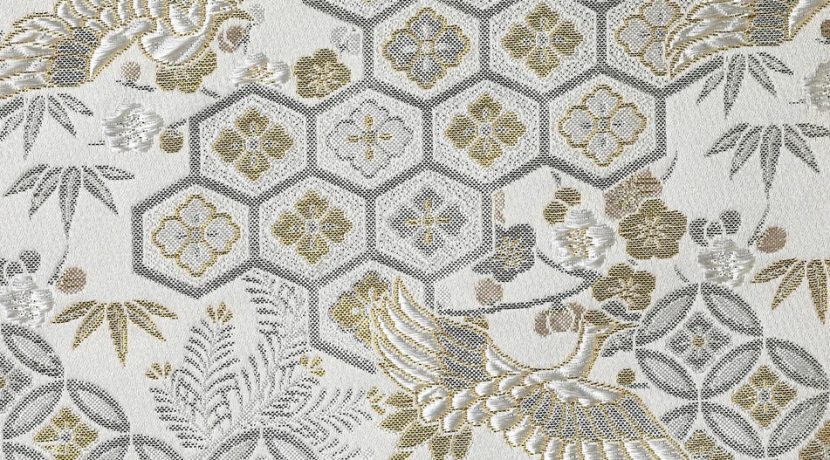
The turtle (kame) represents long life, stability, and protection. In design, it often appears as part of the hexagonal “kikkō” pattern inspired by a turtle shell, combining animal symbolism with geometric form.
Phoenix – Harmony and Auspicious Change
The phoenix (hōō) is a mythical bird tied to harmony, prosperity, and rebirth. It is said to appear only in peaceful, virtuous times. On obi and kimono, phoenix motifs often celebrate joyful transitions and hope for a bright future.
Geometric Patterns with Deep Roots
Seigaiha – Endless Waves
The “seigaiha” or blue-ocean waves pattern depicts overlapping arcs like waves on the sea. It symbolizes peaceful continuity, prosperity, and the wish that life will flow smoothly over time.
Asanoha – Hemp Leaves
The “asanoha” motif is a stylized hemp leaf, forming a sharp, radiating star-like pattern. Because hemp grows quickly and strongly, this design symbolizes healthy growth, resilience, and protection, especially for children.
Kikkō – Tortoiseshell Geometry
Hexagonal “kikkō” patterns are inspired by turtle shells. They blend the turtle’s symbolism of longevity with geometric order, expressing stability, strength, and layered good fortune.
Season, Time, and the Flow of Life
Japanese design often combines multiple seasonal motifs – plum blossoms with snow, maple leaves with flowing water, or layered florals that suggest a full year’s cycle. These combinations remind us that life moves in rhythms: budding, blooming, fading, and returning again.
On an obi, such layered symbolism can tell a story about the wearer’s stage of life, the occasion being celebrated, or the feelings they wish to carry with them – hope, remembrance, gratitude, or quiet strength.
Colors with Cultural Resonance
Color also carries meaning in Japanese design:
- Red: Life force, protection, celebration.
- White: Purity, sacredness, new beginnings.
- Gold: Prosperity, light, refined luxury.
- Black: Depth, elegance, and sometimes formality or mystery.
- Soft pinks and pastels: Gentleness, tenderness, and seasonal softness.
When these colors are combined with specific motifs, the design becomes a layered message: a gold chrysanthemum on deep red suggests powerful blessings; pale pink sakura on white evokes a fresh start and fragile innocence.
From Symbol to Story: Reading Textiles
Japanese design is like a language made of petals, feathers, and waves. Each obi, kimono, or textile carries not only beauty but intention – a wish for the wearer’s health, happiness, and emotional well-being.
For collectors and admirers, learning the symbolism behind these motifs turns each piece into more than fabric. It becomes a small, wearable story of Japanese culture: its respect for nature, awareness of time, and quiet, enduring hope woven into every thread.


 PAGE TOP
この記事へのコメントはありません。