

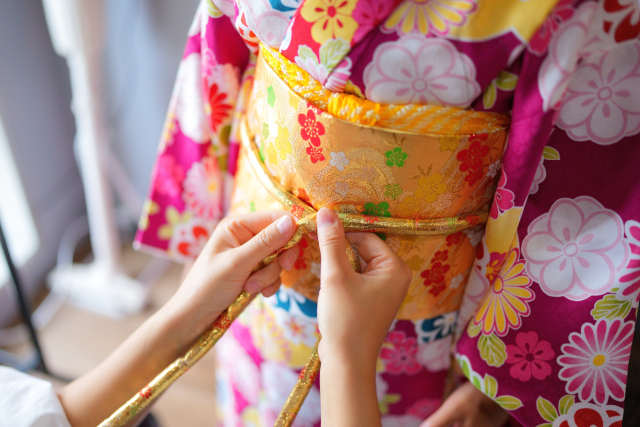
Obi Patterns & Meanings – Auspicious Motifs in Japanese Textiles
On a Japanese kimono obi, patterns are never just decoration. Each motif carries wishes for happiness, longevity, or prosperity that have been passed down for centuries. When we reuse vintage obi in contemporary accessories, we are not only upcycling fabric – we are also inheriting the stories and prayers woven into every thread.
This article introduces some of the most beloved auspicious motifs (kikkyō monyō) often found on kimono and obi, and explores how their meanings can be enjoyed again in modern belts, bags, and jewelry.
What Are Auspicious Motifs?
Traditional Japanese textile patterns are deeply symbolic. Rather than being random ornaments, they were created as visual charms: a peony for wealth and dignity, waves for peaceful continuity, or phoenix feathers for harmonious prosperity. Many of these motifs arrived from China long ago and evolved together with Japanese poetry, court culture, and a refined sensitivity to the seasons.
On formal kimono and obi, such auspicious designs are especially common for life’s milestones – weddings, coming-of-age ceremonies, festive banquets. Today, even when the original garment is reborn as a belt or a clutch bag, the motifs still whisper the same blessings to the wearer.
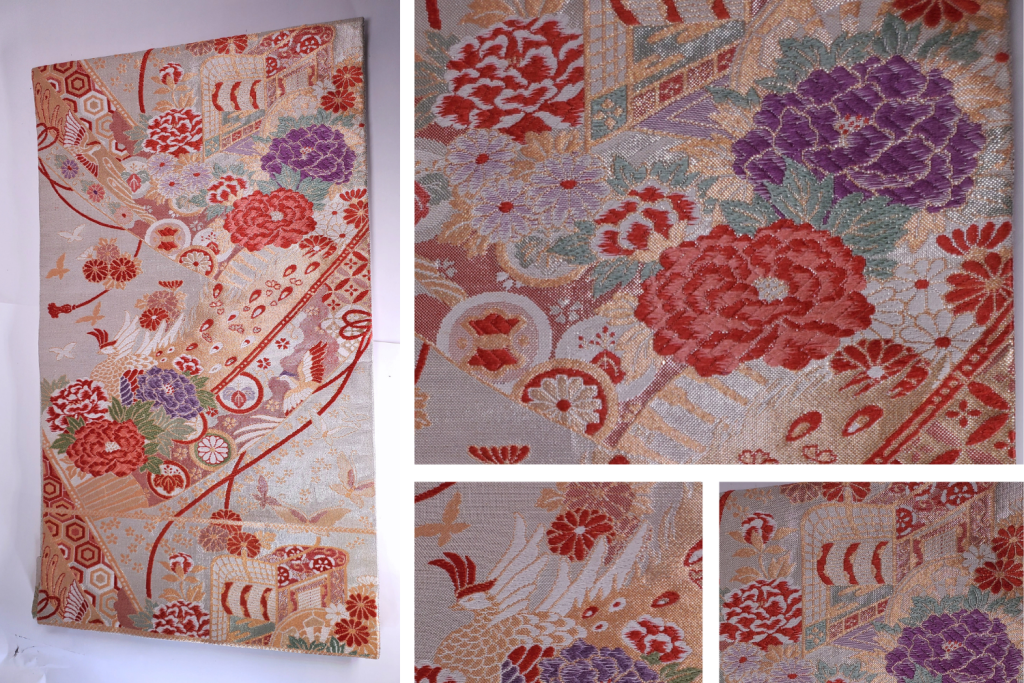
1. Botanzuki – Moonlit Peony
In this obi, several classic Japanese motifs are woven together like a quiet celebration under the moon. Lush peonies, a graceful phoenix, and an elegant court carriage appear among flowing ribbons and garden flowers, creating a scene of prosperity and blessing.
Peony (牡丹 / Botan) — Right Upper Close-Up
The large red and purple blossoms are peonies, long admired in Japan as the “king of flowers.” With their many layered petals and confident presence, they symbolize wealth, dignity, and refined beauty. On an obi, peonies suggest a life filled with grace, good fortune, and mature elegance.
Phoenix (鳳凰 / Hōō) — Bottom Center Image
Near the peonies, a white and red bird with flowing tail feathers represents the mythical phoenix. In Japanese design, the phoenix is a sacred creature that appears in peaceful, harmonious times. It carries meanings of virtue, prosperity, and happy omens for the household, making it a powerful auspicious motif.
Imperial Carriage (御所車 / Gosho-guruma) — Bottom Right Image
The wheeled cart motif recalls the ox-drawn carriages once used by nobles at the imperial court. It evokes courtly life, elegance, and festive occasions such as weddings or seasonal outings. When combined with flowers and birds, the imperial carriage suggests blessings being gently carried into one’s future.
Together, these motifs turn the obi into a poetic scene: moonlit peonies in full bloom, a phoenix gliding through the air, and a court carriage ready for a joyful journey. This is the world of the Botanzuki – Moonlit Peony Collection.
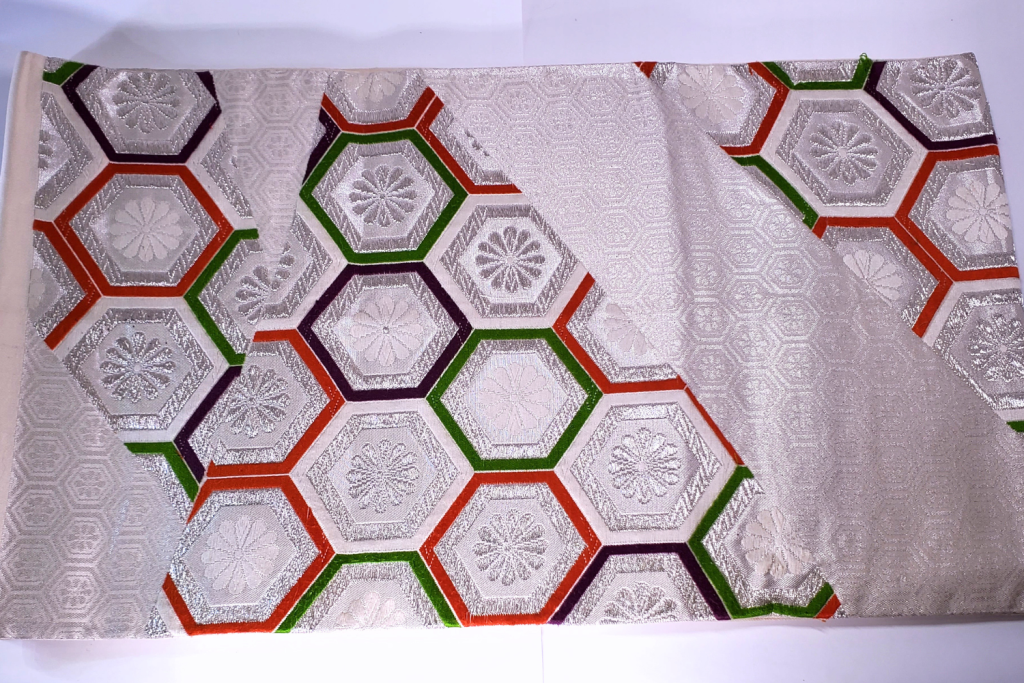
2. Chrysanthemum Layers – Hexagonal Harmony
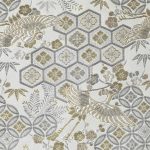
This obi features a striking all-over design of linked hexagons, each softly shimmering in silver and ivory. Inside many of the hexagonal frames, delicate chrysanthemum blossoms are woven in relief, creating a layered rhythm of petals and geometry across the fabric.
Hexagonal Frames – Kikkō for Longevity
The repeated hexagon pattern is known as kikkō, inspired by the shape of a tortoise shell. In Japanese tradition, the tortoise symbolizes a long, steady life, so kikkō patterns carry wishes for longevity, stability, and protection. Here, the strong geometric outlines in orange, green, and deep purple emphasize that sense of structure and continuity.
Layered Chrysanthemum Medallions
Within the hexagons, softly raised chrysanthemums appear like small medallions. The chrysanthemum is associated with the imperial family and is a classic auspicious motif, representing long life, joy, and graceful resilience. The way the blossoms repeat from frame to frame feels like blessings quietly echoing across the surface of the obi.
Subtle Ground Pattern
Behind the bold hexagons, a finer monochrome weave continues the same hexagonal motif in miniature. This layered structure adds depth without overwhelming the main design, suggesting an elegant balance between order and ornament.
Color Story
The combination of ivory and pale silver with accents of vermillion, fresh green, and royal purple creates a refined yet lively impression. These colors highlight the chrysanthemum blossoms while keeping the overall look calm and formal—ideal for pieces meant to carry both festive energy and timeless sophistication.
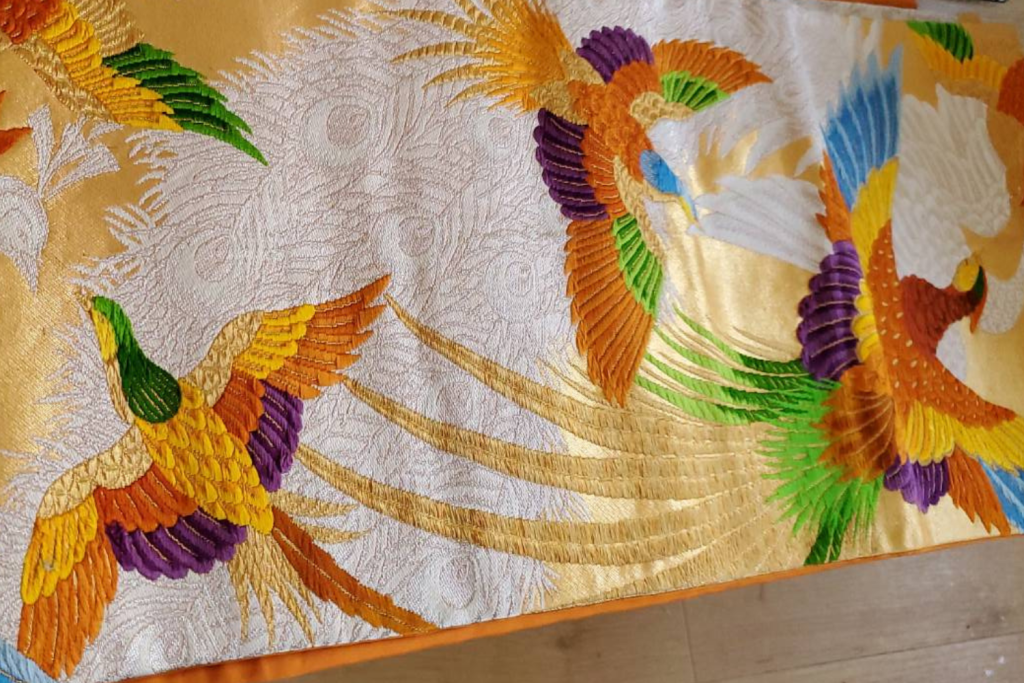
3. Phoenix Motifs – Symbols of Rebirth, Nobility, and Blessing
This obi showcases a series of brilliantly embroidered phoenixes (Hōō / 鳳凰) in vivid jewel-tone colors. In Japanese tradition, the phoenix is a mythical bird that appears only in times of profound peace and harmony. It symbolizes rebirth, virtue, nobility, and auspicious fortune.
Multi-Colored Phoenix (Upper Right)
A dynamic phoenix spreads its wings in shades of orange, green, purple, gold, and blue. The sweeping curves of its plumage represent graceful movement and celestial presence. The phoenix is often associated with imperial authority and is believed to descend from heaven as a sign of great blessing.
Golden & Purple Phoenix (Lower Left)
Another phoenix depicted in gold, yellow, purple, and emerald green glides through the patterned sky. The contrast of warm and cool tones highlights the bird’s elegant feathers and dignified posture. This figure symbolizes renewal, longevity, and beauty revived.
Radiant Tail Feathers & Flowing Lines
The long, radiating tail feathers rendered in shimmering gold threads amplify the sense of motion and divine energy. These flowing lines are reminiscent of celestial winds, expressing the phoenix’s connection to the heavens.
White Background Pattern
Behind the phoenixes runs an intricate white brocade pattern that resembles clouds or sacred mist. This background enhances the mythical atmosphere, suggesting an ethereal world where auspicious creatures circulate freely.
Overall, this obi design is a celebration of prosperity, peace, and rebirth. The phoenix motifs make it especially suitable for occasions of joy, new beginnings, and personal transformation.
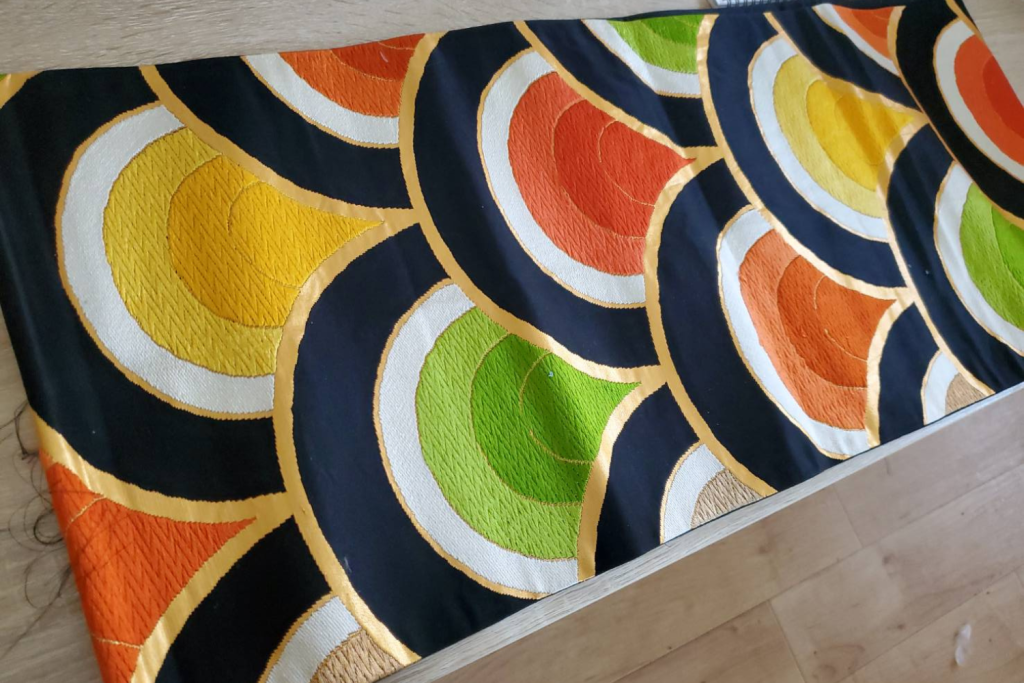
4. Geometric Seigaiha Waves – Vibrant Modern Interpretations
This obi features a bold and contemporary reinterpretation of the traditional Seigaiha (青海波) motif—an ancient Japanese pattern formed by layered, arching waves. Traditionally, Seigaiha represents peace, long-lasting happiness, and the hope for a calm, prosperous life. In this design, the motif is transformed into large, dynamic crescents filled with rich texture and color.
-
Design Elements Observed
[Layered Wave Crescents]
The overlapping arcs in yellow, orange, green, white, and gold echo the rhythmic curve of ocean waves. The bold navy background enhances the contrast, giving the pattern a modern, almost architectural presence.
[Textured Embroidery]
Each color segment is filled with fine directional stitching, adding depth and movement—almost like ripples expanding on water. This texture emphasizes the “flow” that Seigaiha traditionally symbolizes.
[Gold Accents]
Gold outlines highlight the borders of each crescent, adding a refined glow and echoing the luxurious quality of classic Japanese formalwear.
[Modern Color Palette]
While Seigaiha is historically rendered in indigo or subtle tones, this obi uses vibrant citrus colors—yellow, orange, and lime green—bringing fresh energy and a distinctly contemporary mood.
Symbolic Meaning
The Seigaiha pattern symbolizes eternal waves of good fortune. Its consistent, repeating curves represent the calm persistence of the ocean and the flow of time. This obi’s vivid color scheme adds a modern layer of meaning—energy, optimism, and creative renewal—while preserving the auspicious tradition behind the motif.
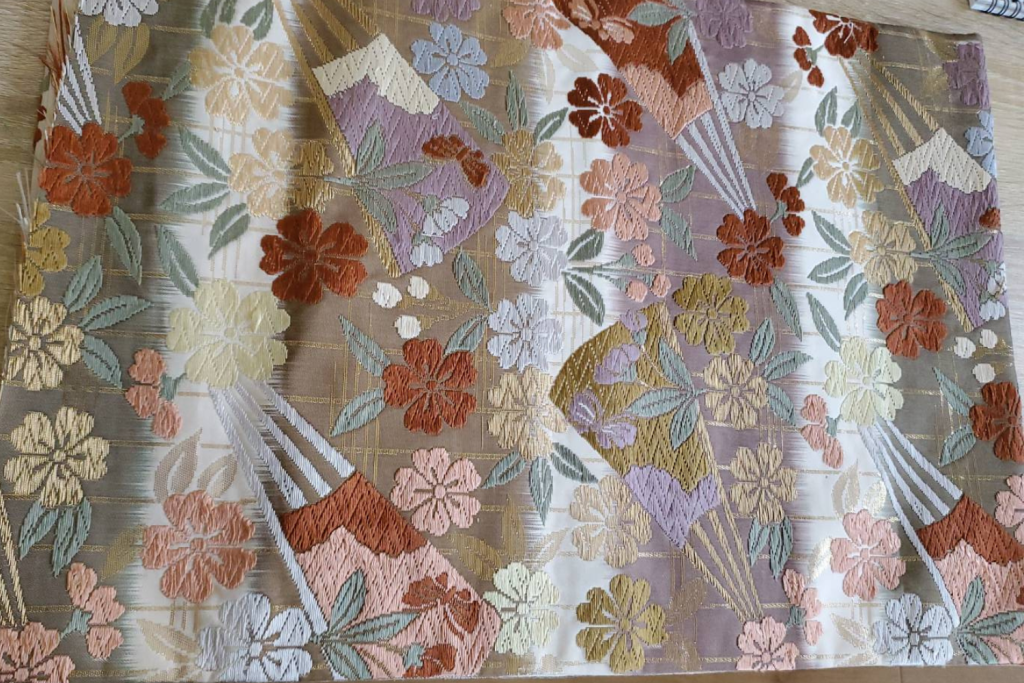
5. Hanagasumi Obi – Gentle Spring Haze of Blossoms & Fans
This vintage obi is woven like a soft spring breeze: layers of cherry blossoms drift across a hazy ground, while elegant folding fans open and close between the flowers. The gentle beige and taupe tones are touched with warm apricot, pale lilac, and soft gold, giving the fabric a calm yet romantic mood. The pattern name “Hanagasumi” (flower haze) evokes the way sakura seem to blur the landscape when they are in full bloom.
Cherry Blossoms (Sakura)
Scattered across the obi are clusters of five-petaled cherry blossoms in shades of cream, blush, apricot, and dusty lavender. In Japanese culture, sakura symbolize the beauty of the present moment and the fleeting nature of life. Because they bloom all at once and fall quickly, they are also associated with fresh beginnings, graduation, and the arrival of spring. Wearing sakura motifs is a quiet wish to savor each season of life with grace.
Flowing Branches & Leaves
Slender branches and soft green leaves weave between the blossoms, guiding the eye diagonally across the fabric. These flowing lines suggest living growth and gentle movement, as if the flowers are swaying in a mild breeze. The interplay of warm brown stems and cool green foliage balances the design and adds a natural, organic rhythm.
Folding Fans (Ogi)
Throughout the pattern, folding fans open like beams of light behind the flowers. The fans are rendered in calm pastel tones—peach, ivory, and lavender—outlined with subtle gold. In Japanese tradition, a folding fan opens outward from a single pivot, symbolizing wishes that expand and flourish. Fan motifs are linked with celebration, elegance, and auspicious occasions, making this obi well suited for festive or joyful scenes.
Spring Haze & Layered Ground
The background is composed of softly shimmering vertical bands and checks that fade in and out like mist. This delicate layering expresses the idea of kasumi—haze or light fog—which blurs the boundaries between sky, landscape, and blossom. The effect is gentle and atmospheric, as though the viewer is looking through a veil of spring light.
Together, the sakura, flowing branches, and auspicious fans create an obi that feels like strolling beneath cherry trees just as the petals begin to fall. It carries meanings of renewal, celebration, and quiet optimism—an elegant textile that wraps the wearer in the soft, luminous mood of early spring.
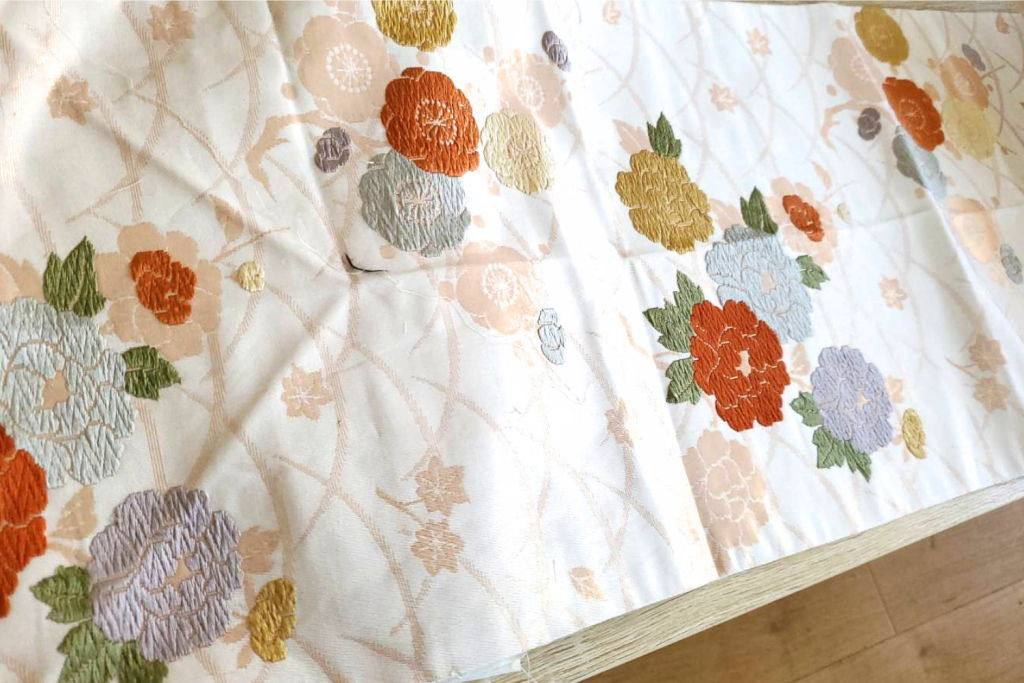
6. Pale Floral Haze – Peony and Sakura Motifs
This obi features a soft, incense-like white and peach ground scattered with rounded floral bouquets. Gentle pastels — persimmon orange, lilac, celadon green and muted gold — create a calm, luminous surface, like petals seen through spring mist. Fine curving lines and tiny blossoms drift across the fabric, giving the impression of fragrance carried on a breeze.
Peony Blossoms (Botan)
The large, many-layered flowers in orange, lilac and pale yellow represent peony, a classic motif of prosperity and elegance. In Japanese symbolism, the peony is the “queen of flowers,” associated with good fortune, graceful confidence and a life lived in full bloom.
Small Sakura Flowers
Scattered between the larger blooms are tiny five-petaled flowers, suggesting cherry blossoms. Sakura mark the arrival of spring and evoke the beauty of brief, shining moments. They symbolize renewal, hope and a tender awareness that every season of life is precious.
Trailing Branches and Curved Lattice
The fine, peach-colored lines that weave across the ground resemble slender branches or a flowing lattice. They guide the eye gently through the design, suggesting connections, continuity and the quiet flow of time. The way they cradle each cluster of flowers gives the pattern a feeling of protection and harmony.
Together, these motifs create a textile that feels both refined and comforting — like a faint fragrance that lingers in the air. Peony for richness of the heart, sakura for tender renewal, and flowing lines for the calm passage of days: this obi carries wishes for a life filled with gentle joy, understated luxury and quietly enduring beauty.
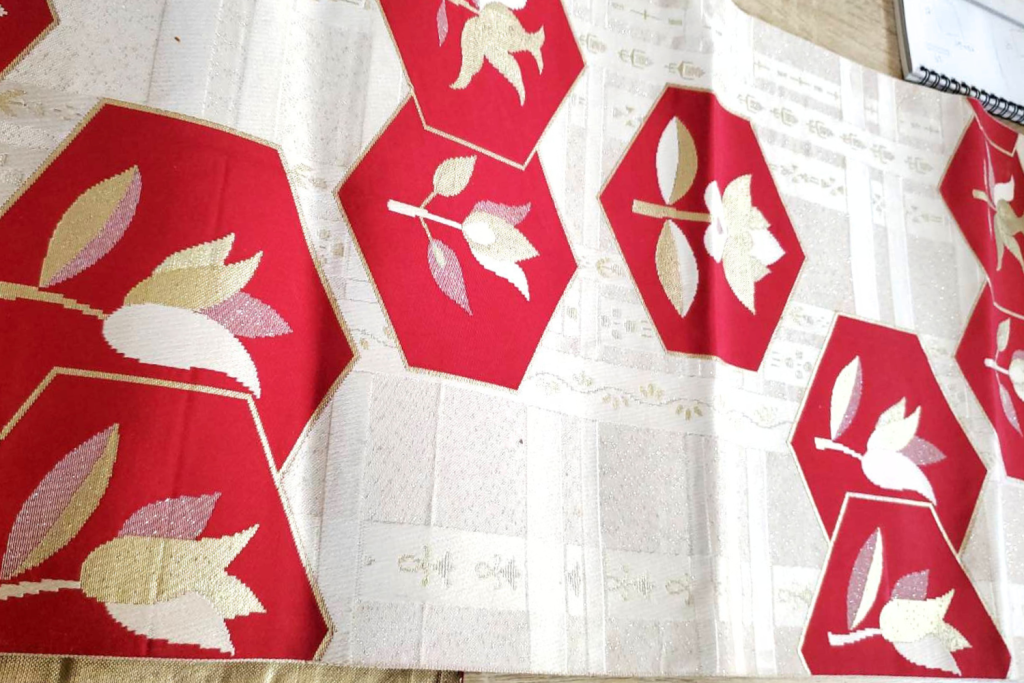
7. Red Hexagonal Floral Obi
This vintage obi features a striking modern aesthetic, blending bold geometric forms with elegant floral motifs. Deep vermilion hexagons create a rhythmic pattern across a shimmering ivory ground, each frame holding a simplified, stylized blossom. The contrast between the vivid red and the soft metallic sheen gives the fabric a refined yet expressive presence. This design is a beautiful example of how traditional Japanese motifs can be reinterpreted through a contemporary lens, creating a piece that is both timeless and artistically bold.
-
Hexagonal Frames (Kikkō-inspired Geometry)
The repeating six-sided frames echo the spirit of kikkō, a geometric pattern rooted in the tortoiseshell motif. Although this interpretation is more modern and minimalist, hexagons still symbolize longevity, protection, and structural harmony. Their even rhythm creates stability throughout the composition.
Stylized Blossoms
Inside each hexagon is a highly simplified flower motif woven in warm shades of gold, white, and soft pink. This abstraction of a traditional floral pattern suggests elegance without over-detailing, giving the obi a clean and modern impression. Flowers in Japanese textiles broadly express beauty, seasonal grace, and the celebration of life’s cycles.
Shimmering Ivory Ground
The background is woven with delicate geometric textures and subtle metallic threads, adding depth without distracting from the bold hexagonal forms. This shimmering base enhances the overall luminosity of the piece, balancing light and color in an understated, sophisticated way.
With its bold vermilion geometry and refined floral abstractions, this obi seamlessly merges tradition and contemporary design. Its vibrant yet composed aesthetic makes it a versatile textile—one that speaks equally to heritage, craftsmanship, and modern artistic expression.
Final Thoughts
Japanese obi textiles are far more than decorative fabrics—they are cultural archives woven in silk. Each motif carries prayers for happiness, prosperity, longevity, or protection, passed down through centuries of tradition. Whether it is the bold strength of the peony, the graceful arc of a folding fan, the auspicious flight of a phoenix, or the timeless geometry of hexagonal patterns, every design reflects a deep appreciation for nature, beauty, and the hopes of the people who wore them.
Today, these motifs continue to resonate, not only as elements of historical kimono attire but also as sources of inspiration for modern art, fashion, and craftsmanship. By transforming vintage obi into contemporary pieces, we honor the stories embedded in the fabric and offer them a new life—one that bridges past and present, heritage and creativity.
May these patterns and their meanings bring inspiration, joy, and a deeper connection to the cultural elegance of Japan.



 PAGE TOP
この記事へのコメントはありません。