

Japanese Textile Techniques: Weaving, Dyeing & Embroidery in Kimono Obi
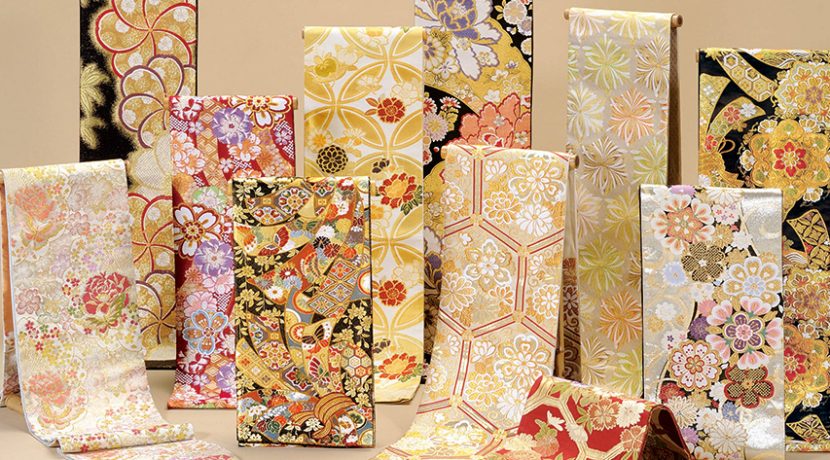
Japanese kimono and obi textiles are far more than beautiful fabrics – they are the result of centuries of refined techniques, patient craftsmanship, and regional traditions. Understanding how these textiles are made helps us appreciate why vintage obi feel so special: every shimmer of gold, every soft gradient of color, and every raised motif carries the trace of a specific technique and the artisan’s hand.
On this page, we’ll look at key Japanese textile techniques often found in kimono and obi: weaving methods, dyeing and resist techniques, embroidery, and surface decoration. These are the foundations behind the fabrics that Obi Couture Tsukihana upcycles into modern belts and bags.
1. Weaving Techniques(織り)
Japanese weaving techniques create the structure, texture, and base patterns of kimono and obi fabrics. Many obi are woven motifs rather than printed, which is why the designs feel so rich and three-dimensional.
1.1 Nishijin-ori(西陣織)
Nishijin-ori is a prestigious weaving tradition from the Nishijin district of Kyoto, known for its luxurious, multi-colored brocade. Artisans use multiple weft threads – often including silk, gold, or silver foil–wrapped yarns – to build complex patterns into the fabric itself. Peonies, phoenixes, clouds, and geometric motifs in Nishijin-ori obi seem to “float” on the surface, catching light differently from every angle.
1.2 Tsuzure-ori(綴れ織)
Tsuzure-ori, or tapestry weave, is created by inserting weft threads by hand to form detailed pictures and bold motifs. Unlike regular weaving, where the weft runs straight across, tsuzure weavers work in small sections, almost like painting with thread. This technique often appears in high-end obi where each floral, bird, or cloud motif has a sculptural, hand-built quality.
1.3 Rinzu(綸子)
Rinzu is a type of figured satin weave where subtle patterns are woven into a smooth, lustrous ground. From a distance the fabric might look solid, but up close you see chrysanthemums, waves, or arabesques shimmering in the light. Rinzu is often used as a base for dyeing or painting, adding depth under later color work.
1.4 Hakata-ori(博多織)
Hakata-ori is a structured, ribbed weave originating from Hakata in Fukuoka. It features bold stripes and geometric patterns, traditionally in colors like deep purple, white, and black. Hakata obi are firm and resilient, making them ideal for functional ties while still carrying strong symbolic motifs such as Buddhist-inspired patterns.
1.5 Kasuri(絣)
Kasuri, or ikat, is a technique where threads are resist-dyed before weaving so that patterns appear as soft, slightly blurred designs in the finished cloth. The “fuzzy” edges of kasuri motifs are intentional – they give a feeling of movement and warmth, and are especially beloved in casual kimono and some obi textiles.
2. Dyeing & Resist Techniques(染め・防染技法)
While some obi designs are created purely through weaving, others rely on dyeing and resist techniques to add color, gradation, and pictorial motifs on top of the fabric.
2.1 Yūzen(友禅染め)
Yūzen is a hand-painted dye technique developed in Kyoto. Designs are first drawn onto the fabric, then outlined with a resist paste (originally rice paste) to keep colors from bleeding into each other. After the dyes are applied and steamed, the resist is removed, leaving crisp, detailed motifs: peonies, maples, cranes, flowing water, fans, and more. Gold leaf, fine embroidery, or additional over-painting are often added to yūzen-dyed obi for extra richness.
2.2 Shibori(絞り染め)
Shibori is a general term for tie-dye and clamp-resist techniques in Japan. Fabric is bound, stitched, twisted, or compressed with thread and small tools before being dyed. When the bindings are removed, intricate patterns of dots, rings, ripples, and clouds appear. Fine shibori work can create almost lace-like textures and is sometimes combined with other techniques in kimono and obi designs.
2.3 Gradation Dyeing(ぼかし染め)
Many elegant obi feature soft color gradations called bokasi, where one shade melts gently into another. Artisans brush dye onto damp fabric or dip it in stages, allowing tones to shift from deep to pale. These subtle transitions are often used behind floral or seasonal motifs, suggesting dawn skies, evening light, or mist over water.
3. Embroidery Techniques(刺繍)
Embroidery adds texture, highlights, and three-dimensional detail to woven or dyed designs. On formal obi, embroidery often emphasizes auspicious motifs such as cranes, phoenixes, peonies, or auspicious clouds.
3.1 Silk Satin Stitch & Outline Stitch
Fine silk threads are used to fill petals, leaves, and feathers with smooth satin stitches, sometimes layered to create subtle shading. Outline stitches trace the edges of motifs, giving them clarity and definition against the ground. In vintage obi, you may see embroidery sitting slightly raised on the surface, catching light differently from the surrounding weave or dye.
3.2 Goldwork & Couching(刺繍金糸・ couching)
Goldwork in Japanese textiles often uses metallic threads or paper–wrapped threads that are too stiff to pass through the fabric repeatedly. Instead, the gold thread is laid on the surface and stitched down with fine silk in a technique known as couching. Curved lines of gold can highlight clouds, waves, halos, and floral centers, giving obi a sense of opulence and ceremony.
3.3 Sashiko-inspired Stitches(刺し子)
While traditional sashiko is a reinforcement and quilting technique using white cotton stitches on indigo cloth, its aesthetic sometimes appears in modern kimono accessories. Even, running stitches arranged in geometric patterns can add a handmade, tactile feeling to contemporary obi-inspired pieces.
4. Surface Decoration & Finishing(表面加工・仕上げ)
Beyond weaving, dyeing, and embroidery, Japanese textiles often feature additional surface treatments that enhance light, depth, and symbolism.
4.1 Surihaku & Roketsuzome Elements
Surihaku refers to the application of gold or silver foil onto the fabric surface using an adhesive, then gently rubbing it down so that it bonds with the textile. Delicate foil areas might appear as moonlight, mist, or stylized clouds in an obi design. In some pieces, wax-resist (roketsuzome) effects or layered stenciling are combined with foil and dye to create complex, shimmering surfaces.
4.2 Jacquard-like Structured Grounds
Even when a motif seems simple, the ground of an obi may have an intricate jacquard-like structure: tiny diamonds, waves, arabesques, or floral scrolls woven into the base. These subtle patterns interact with light so that the fabric never looks flat, giving a quiet luxury that reveals itself as you move.
5. Why These Techniques Matter for Vintage Obi
Each vintage obi is a small archive of techniques: a piece might combine Nishijin-ori weaving, rinzu ground, yūzen-dyed motifs, and goldwork embroidery all in one textile. When we upcycle such fabrics into contemporary accessories, we are not simply reusing material – we are carrying these techniques, stories, and symbols into a new chapter of their life.
By understanding Japanese textile techniques, we can better appreciate why a particular obi feels especially refined, why its patterns glow rather than simply sit on the surface, and why no two pieces are ever truly the same. That depth is what makes wearing or carrying obi textiles feel like wrapping yourself in a living history of Japanese craft.

 PAGE TOP
この記事へのコメントはありません。