

How Obi Fabrics Are Made
A Japanese obi is much more than a simple belt. Behind each piece lies a long process of planning, weaving and finishing that can involve many different craftspeople. In this article, we will walk through how traditional obi fabrics are made, from the very first design idea to the finished textile ready to be sewn into an obi belt.
From Concept to Design
The process begins with a design concept. A designer or master weaver decides on the overall mood of the obi: formal or casual, seasonal or timeless, bold or understated. They choose:
- Color palette (for example, soft pastels for spring, deep tones for ceremony)
- Motifs such as peony, chrysanthemum, cloud, wave, or geometric patterns
- The type of obi (such as fukuro-obi or nagoya-obi) and its intended use
Detailed design drawings are made to show exactly where each motif will appear along the length of the obi, keeping in mind how it will look when tied on the body.
Selecting Materials
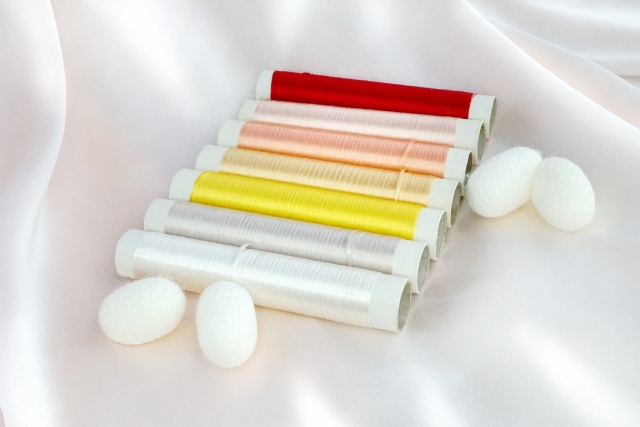
Traditional formal obi are usually made from silk, often combined with metallic threads to create a luxurious shine. More casual obi may use silk blends, rayon, or other modern fibers.
For high-end pieces, the yarns are chosen very carefully:
- Warp yarns (running lengthwise) provide structure and strength
- Weft yarns (crosswise) carry the visible design and color
- Metallic threads add highlights, outlines, or shimmering backgrounds
Dyeing the Yarns
Before weaving, many yarns are dyed to precise colors. There are two main approaches:
- Piece-dyeing: yarns are dyed in solid colors, then used to weave stripes, checks or geometric patterns.
- Pattern-dyeing (itozome): specific sections of yarn are dyed different colors according to the design plan, so that motifs appear when the yarns are woven.
The dyer adjusts water temperature, time and dye concentration to reproduce the designer’s color chart as accurately as possible.
Setting Up the Loom
Once the yarns are ready, the warp yarns are wound onto a beam and threaded through the loom heddles and reeds. This step alone can take many hours, especially for complex patterns.
For patterned obi, a jacquard mechanism or other pattern control system lifts specific warp threads in a programmed sequence. This allows the weaver to create detailed motifs such as flowers, clouds, or phoenix birds directly in the weave.
Weaving the Obi Fabric
During weaving, the artisan sends the weft yarns back and forth across the warp, following the design plan. Depending on the type of obi, different weaving techniques are used:
- Brocade (nishiki): thick, patterned cloth with multiple colored wefts and metallic threads
- Satin and twill weaves: smooth, lustrous surfaces ideal for formal obi
- Textured weaves: raised patterns or subtle relief effects
Weaving can be done on handlooms or power looms, but even with modern equipment, a great deal of human skill is needed to keep the pattern perfectly aligned and the fabric tension even.
Adding Embroidery or Surface Decoration
Some obi fabrics are complete after weaving, but others receive additional decoration. Artisans may:
- Embroider motifs with silk or metallic threads for extra depth
- Add gold leaf or foil in delicate layers
- Use stencil dyeing or hand painting to highlight certain areas
These techniques turn the woven cloth into something closer to textile art than simple yardage.
Backing and Stabilizing the Fabric
Obi fabric must be strong enough to wrap firmly around the body and hold its shape when tied. For this reason, many obi fabrics are backed and stabilized.
A backing fabric or paper layer may be applied to the reverse side to:
- Strengthen delicate silk
- Protect complex weave structures
- Control stretch and drape
The artisan carefully presses the fabric so that it lies flat and smooth, ready to be cut and sewn into a finished obi belt.
Inspection and Finishing
Before the fabric leaves the workshop, it is thoroughly inspected. The maker checks:
- Whether the pattern is consistent along the entire length
- Whether there are any broken threads or flaws
- Whether the colors match the original design plan
Any loose threads are trimmed, and the fabric is rolled carefully to avoid creasing. At this stage it can be sent to an obi maker or tailor to be cut, lined and finished as a wearable obi.
The Time and Craft Behind Each Obi
From the first design sketch to the final inspection, making an obi fabric can involve many different specialists: designers, dyers, weavers, embroiderers and finishers. The process takes time, patience and deep knowledge passed down through generations.
When you wear or repurpose a vintage obi, you are wrapping yourself in all of that hidden work and history. Understanding how obi fabrics are made adds a new layer of appreciation for every thread, motif and shimmer of light across the surface.

 PAGE TOP
この記事へのコメントはありません。